
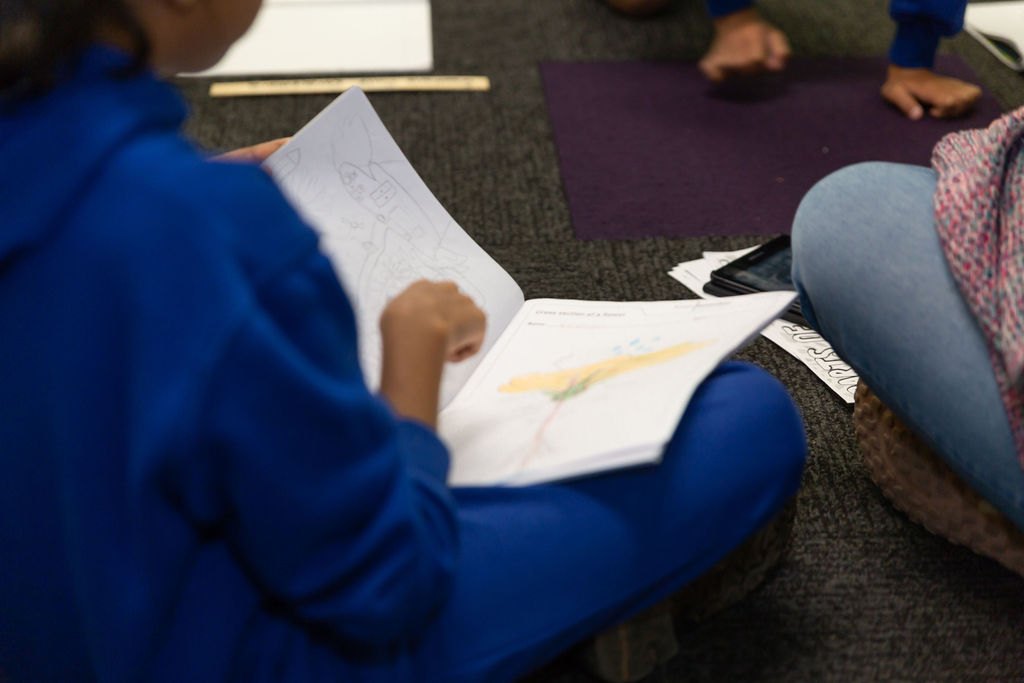
 Students arrive with a wide range of abilities and at times challenges, and are welcomed into an environment where they feel valued and supported, and are encouraged to achieve to the best of their own ability. We have the resources and expert support required to tailor learning to different styles and capabilities. Our staff are cognisant of diverse learning needs. Learning Support is provided for students with learning, communication or concentration difficulties, or for those with physical needs that require an environmental adjustment. It may be provided individually or in groups, depending on the needs of the student. Our staff work closely with parents, class teachers, specialist teachers and, where appropriate, school psychologists. The guiding principle is to enable all students to achieve their potential and experience a sense of belonging and personal success. Early understanding and identification of student needs supports planning forward and catering for individual student needs.
Students with disability
Every child or young person is welcome to learn at their local ACT public school. Our school is committed to removing barriers so all students can access learning. Quality teaching practice helps all students, and our teachers make adjustments for students who need them to ensure they successfully access and participate in learning and school activities.
Adjustments for students may include:
- providing extra visual cues and information
- breaking down tasks or presenting them in a different way
- providing more practice of learning tasks or repetition
- checking for understanding
- changes to the environment
- providing other ways for a student to communicate
- strategies to meet a student’s sensory needs
- access to quiet spaces to assist with regulation.
These adjustments might be made in a smaller group learning situation and at times the class teacher may be assisted by another educator.
Read more about how students with disability are supported in ACT public schools.
Small Group Program (SGP)
The SGP is a unique learning space tailored to the specific needs of students in partnership with families. Each child has their own learning program catering for their strengths and learning. Staff are highly trained and experienced, with a focus on care, kindness and fostering learning. Families work closely with the classroom teachers to optimise learning for every child. Children in the SGP have a paired class of same aged peers that they join throughout the week for a range of learning experiences. Children in the SGP attend assemblies, carnivals, excursions, camps and other year specific events with their peers.
School Psychologist
A part-time School Psychologist is part of our school’s staffing configuration. School psychologists focus on students' wellbeing for learning. While they do not provide individual therapy, in their role, they may address:
- learning issues
- social, emotional or behaviour concerns
- barriers to students attending or taking an active part in school.
The School Psychologist will often connect students or families with other services, either through the school or with an external provider.
The School Psychologist at Garran Primary works closely with the Additional Needs Committee. Children or families requiring support are identified through the Garran Additional Needs Referral Process.
Additional Needs Committee
The Additional Needs Committee meets regularly to discuss and review student needs. Areas of focus may include physical, learning, social, behavioural or health needs. The Committee comprises of the School Psychologist, Deputy Principal, the Disability Education Coordination Officer (DECO), Team Leaders and the class teacher/s. This Committee works to support students in terms of resourcing, intervention programs, reasonable adjustments, referrals to outside agencies, physical resourcing, specialist testing, transitions and referrals to specialised programs. The Committee works closely throughout the year with class teachers, specialist teachers and the intervention team within the school as well as multidisciplinary agencies external to the school to support student welfare and individual needs.